Attic Spray Foam Insulation
The attic is where most homes and buildings lose the most conditioned air — spray foam seals it at the source instead of just slowing it down.
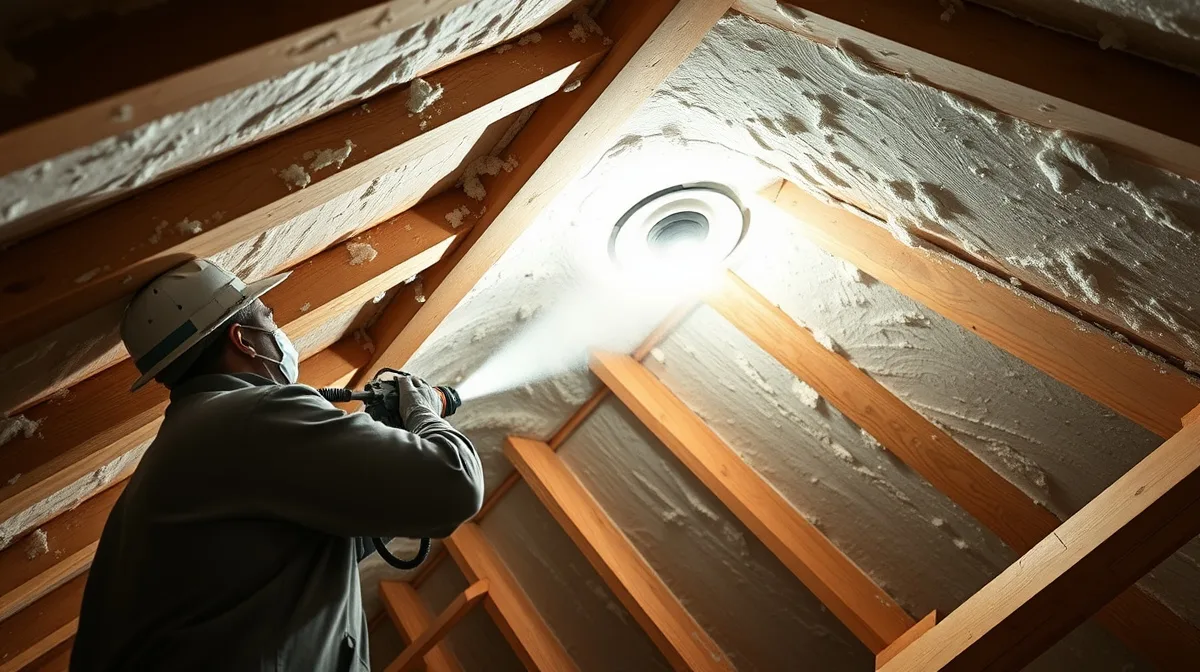
More energy escapes through the attic than through any other single part of a house or commercial building. Hot air rises, and in a traditionally vented attic with only fiberglass batts or blown cellulose laid across the floor, conditioned air finds its way up and out through can lights, plumbing stacks, wiring penetrations, top plates, and the attic hatch itself. Spray foam insulation is the single highest-volume project we install nationwide because it addresses that leakage directly, expanding to fill and seal every gap and cavity in one application instead of simply draping a layer of material over the top of the problem.
We install spray foam in attics two ways, and which one is right depends on the goals for the space and the building. Traditional vented attic floor spraying keeps the attic outside the conditioned envelope and the roof vents doing their job, while unvented (conditioned or encapsulated) attic conversions spray the underside of the roof deck directly, pulling the entire attic volume — ductwork, air handlers, and all — into the conditioned space. Both approaches use the same core material and crews; the difference is where the thermal and air barrier gets built. We help homeowners, builders, and property owners pick the right one for their roof, climate, and mechanical layout, then quote it as a defined project instead of a vague per-square-foot guess.
Why property owners choose it
- Air-seals and insulates the attic in a single application, closing the gaps fiberglass and cellulose simply lie on top of.
- Cuts the stack-effect air leakage that drives high heating and cooling bills in homes with vented, floor-insulated attics.
- Brings ductwork and air handlers into conditioned space when the roof deck is sprayed, so equipment isn't fighting attic temperatures that can swing past 130°F in summer or well below freezing in winter.
- Reduces ice-dam risk in cold climates by keeping roof deck temperatures more consistent with the rest of the structure.
- Delivers a higher, more stable R-value per inch than fiberglass or cellulose, with no settling loss over time.
- Lowers HVAC load in the attic itself, which can support smaller equipment sizing on new builds or less strain on existing systems.
Unvented (Conditioned) Attics vs. Traditional Vented Attic Floor Spraying
There are two fundamentally different ways to spray foam an attic, and picking the right one is the first real decision on this project. Traditional vented attic floor spraying leaves the roof vents, soffits, and ridge vent doing their normal job, and instead builds the thermal and air barrier at the attic floor — sprayed directly onto the floor deck and around every penetration, then typically topped or supplemented per the specified R-value target. The attic stays a hot, unconditioned space above a sealed, insulated ceiling plane.
An unvented or conditioned attic conversion does the opposite: we spray the underside of the roof deck and gable ends, closing off the soffit and ridge vents from the attic interior and pulling the whole volume into the building's conditioned envelope. This is the right call when ductwork or an air handler already lives in the attic, when the roof line is complex enough that floor-plane air-sealing would be full of hard-to-reach gaps, or when a builder wants a conditioned attic as usable mechanical or storage space. Closed-cell foam is the standard choice for roof deck applications because of its rigidity and moisture performance against the sheathing.
- Vented floor spray: keeps traditional attic ventilation, seals at the ceiling plane
- Unvented roof deck spray: closes off vents, conditions the whole attic volume
- Roof deck work typically uses closed-cell foam for moisture and rigidity
- Existing ductwork in the attic is a strong signal for the unvented approach
- Roof complexity and access both factor into which method we recommend
Where an Attic Actually Loses Energy
Most homeowners assume attic energy loss is about insulation thickness alone, but the bigger driver in most vented attics is air movement, not R-value on paper. Warm conditioned air is naturally buoyant, and it pushes up and out through every unsealed penetration in the ceiling plane — recessed can lights, bathroom and kitchen exhaust ducts, plumbing vent stacks, electrical wiring holes, the framing gap around a chimney chase, and the attic access hatch. Fiberglass batts and blown cellulose lay across the tops of these gaps without sealing them, so the house keeps losing conditioned air through the attic no matter how many inches of material sit up there.
Spray foam solves this because it expands into every one of those irregular gaps and cures as a continuous air barrier, not just a thermal blanket. That's the core reason attic projects are the single highest-volume service we run: it's the one part of nearly every building where the energy-loss math and the air-sealing fix line up most clearly, and it's usually the fastest payback area to address before tackling walls, crawl spaces, or rim joists.
Pairing Attic Foam With HVAC Efficiency
When ductwork and an air handler sit in an unconditioned attic, they're losing and gaining heat through duct walls before the air ever reaches a room — a real, well-documented efficiency loss that shows up directly on utility bills. Converting to an unvented, conditioned attic by spraying the roof deck moves that equipment into the same temperature band as the rest of the house, so the ducts aren't fighting a 130-degree attic in July or a freezing one in January just to deliver air a few feet away.
This pairing matters most on retrofits where ducts can't easily be relocated and on new construction where the roof line and mechanical layout are decided together. Builders sizing HVAC equipment for a conditioned attic can often spec smaller, less expensive units because the attic is no longer an extreme-temperature zone bleeding capacity from the system. We coordinate this decision with the mechanical trade whenever possible so the insulation plan and the HVAC plan are working toward the same result instead of being decided in isolation.
Ideal for
- Homeowners with a hot upstairs, uneven room temperatures, or an attic that feels far hotter or colder than the outdoor temperature.
- Existing homes with ductwork or an air handler located in an unconditioned vented attic.
- New construction and remodel projects where the roof line is being framed or re-decked and a conditioned attic is part of the energy plan.
- Builders and GCs targeting IECC energy code compliance with a documented air-sealing and insulation strategy.
- Commercial and light-industrial buildings with large, simple roof decks where attic or roof-cavity heat loss is driving up energy costs.
What affects the cost
Attic Insulation questions, answered
Most attic projects run $2,500-$7,500 total, with a typical 1,000-square-foot attic landing around $3,000-$5,000 for open-cell or $4,500-$7,000 for closed-cell. The exact number depends on square footage, roof complexity, and whether we're spraying the attic floor or the full roof deck, so we treat published ranges as a starting point and confirm a firm number with a free estimate.
It depends on what's in the attic and how the roof is built. If ductwork or an air handler is up there, or the roof line is complex, spraying the roof deck to create a conditioned attic is usually the better fix. If the attic is simple, unused space with no mechanical equipment, sealing and insulating the floor plane while keeping normal attic ventilation is often the more cost-effective route.
In many cases yes, especially for floor-plane projects where existing fiberglass or cellulose is dry, uncompressed, and in good condition. If the old insulation is wet, moldy, pest-damaged, or compressed flat, we recommend removing it first so the spray foam bonds properly and the attic isn't sealing in a moisture or pest problem.
An unvented conditioned attic intentionally closes off the soffit and ridge ventilation that a traditional vented attic relies on, which is a legitimate, code-recognized approach when done correctly with the right foam thickness and vapor strategy. We'll walk through how it affects your specific roof system, and any shingle warranty questions should be confirmed directly with your roofing manufacturer before installation.
A standard residential attic, floor or roof deck, typically takes one day for the spray application itself, though larger commercial roof decks or attics with extensive existing insulation removal can take longer. We'll give you a specific timeline, including any required cure and reoccupancy window, as part of your estimate.
Attic Insulation done right, by a dedicated spray foam crew
Attic Insulation isn't a commodity — the result depends entirely on how carefully it's planned and applied for your specific space. We assess what your project actually needs, prep the area properly, and apply to the depth and product your goals require, so the work delivers the comfort and savings it's supposed to. No shortcuts, no builder-grade rush.
We serve homeowners, builders and general contractors, and commercial property owners nationwide. Every job starts with a free, no-pressure assessment.
Just as important, we treat your building as a system. Air-sealing, insulation product choice, and ventilation all interact — getting one right while ignoring the others leaves comfort and savings on the table. When we scope your attic insulation, we look at how it fits the whole picture, so the finished result performs the way it should and actually lowers the bills you feel every month.
Free assessment
We evaluate your space and give you a clear, itemized quote with no pressure.
Expert application
We prep and spray your attic insulation to spec — clean and on schedule.
Comfort you can feel
A more comfortable, energy-efficient space and honest advice on what your project needs.
Related services
Ready for a free attic insulation quote?
Tell us about your project and we'll put together a clear, no-pressure spray foam insulation quote — residential or commercial, anywhere in the country.