Crawl Space Spray Foam Insulation & Encapsulation
Closed-cell spray foam applied directly to crawl space walls, paired with a full encapsulation approach, seals out moisture and shuts down one of the biggest uncontrolled energy-loss zones in the home.
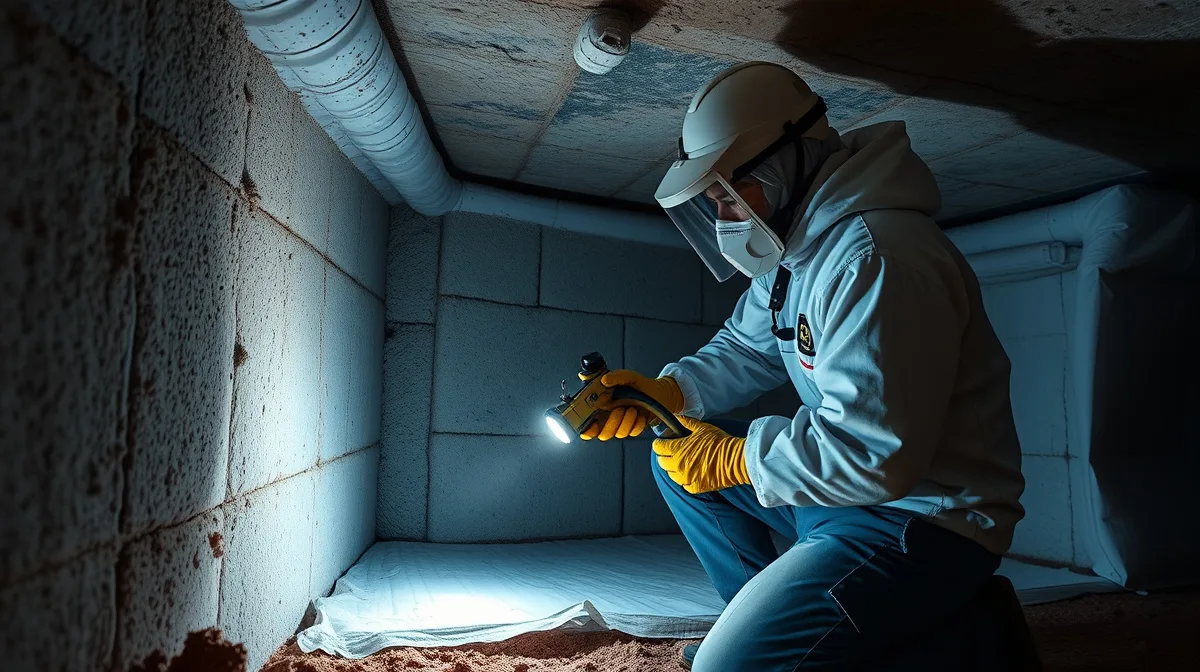
Most crawl spaces were built to be vented, insulated at the floor above, and otherwise ignored — and that approach is a big part of why so many homes have musty smells, cold floors, and humidity problems that never fully go away. A vented crawl space pulls in outside air all year long, and that air carries moisture. In summer it condenses on cool surfaces; in winter it just makes the space, and the floor above it, colder. Fiberglass batts stapled between floor joists slow heat transfer, but they don't stop air movement, and they're notorious for sagging, absorbing moisture, and becoming a rodent nesting spot within a few years. Homeowners often notice the symptoms — a musty smell drifting up through the floor vents, cold spots on hardwood or tile above the crawl space, condensation on ductwork or plumbing — long before they connect them back to how the crawl space itself was built and vented in the first place.
Our crawl space approach flips the model: instead of insulating the floor above and venting the space below, we treat the crawl space as part of the conditioned building envelope. Closed-cell spray foam goes directly onto the foundation walls and rim joist area, creating a continuous air and moisture barrier in one application. Because closed-cell foam is dense, rigid, and effectively closed to moisture vapor, it doesn't just slow humidity — it stops it at the wall. Combined with a vapor barrier on the ground and, where needed, mechanical dehumidification, this is a full encapsulation system, and it's available for crawl spaces under homes, additions, and light commercial buildings nationwide. Whether you're dealing with a decades-old vented crawl space that's never performed well or a new build where you want to get the envelope right from the start, the underlying principle is the same: seal the perimeter, control the moisture, and stop treating the crawl space as an afterthought.
Why property owners choose it
- Closed-cell foam on the walls creates a continuous air and moisture barrier instead of a floor full of gaps and seams.
- Encapsulating the crawl space keeps humid outside air from entering, reducing the musty smell and condensation that drive mold and wood rot.
- Warmer floors above the crawl space mean fewer complaints about cold rooms and drafty flooring in winter.
- Closed-cell foam's high R-value per inch (R-6 to R-7) delivers strong thermal performance even in the tight, low-clearance space of a typical crawl space.
- Sealing the crawl space envelope reduces the load on HVAC equipment, since conditioned air no longer leaks out through the floor system.
- Closed-cell foam resists moisture absorption, so it won't sag, settle, or become a mold host the way batt insulation does in damp crawl spaces.
Walls, Not Just the Floor Above
The traditional fix for a cold floor is to staple fiberglass batts between the joists above the crawl space and call it done. That approach insulates the floor, but it leaves the crawl space itself vented, damp, and thermally disconnected from the rest of the house — and batts sagging under a crawl space ceiling are one of the most common insulation failures we see on inspection. Gravity, moisture, and the occasional visiting pest all work against a stapled batt, and once it starts to sag it stops doing much of anything except holding moisture against the floor above.
Our approach insulates the perimeter foundation walls and rim joist area instead, bringing the crawl space itself inside the conditioned envelope. Closed-cell spray foam is sprayed directly onto the concrete or block walls, sealing every crack, gap, and penetration where outside air and moisture would otherwise get in. This is the same wall-encapsulation logic used in basements, applied to the lower-clearance, often damper conditions of a crawl space. Once the walls and rim joist are sealed, the crawl space stops behaving like an outdoor space with a roof over it and starts behaving like part of the conditioned house — which is exactly the point.
- Closed-cell foam applied directly to foundation walls, not just the floor joists above
- Rim joist and band joist areas sealed as part of the same application
- Continuous air barrier eliminates the gaps typical of batt-and-vent setups
- Compatible with sump pumps, plumbing penetrations, and existing crawl space equipment
Why Closed-Cell for This Application
Crawl spaces are one of the few places in the home where moisture exposure is a near-constant factor, which is exactly why closed-cell foam — not open-cell — is the right material here. Closed-cell foam's tight cell structure makes it resistant to moisture absorption and effectively closed to vapor drive, so it acts as both insulation and a moisture barrier on the wall rather than something that could wick or hold water the way fiberglass or open-cell foam can. Open-cell foam has its place elsewhere in the home, but a damp foundation wall is not the application it was designed for.
That moisture resistance matters because a crawl space that stays damp under insulation is worse than a crawl space with no insulation at all — trapped moisture behind material you can't see is how wood rot and mold get a foothold undetected. Closed-cell foam's higher R-value per inch (R-6 to R-7 versus open-cell's R-3.5 to R-3.7) also means strong thermal performance without needing extra wall depth, which matters in crawl spaces where working room is already tight. On top of the moisture and thermal performance, a fully cured closed-cell application also adds some rigidity to the wall surface, which stands up better to the incidental bumps and scrapes that come with anyone crawling through the space for future plumbing, wiring, or HVAC work.
- Closed-cell foam resists moisture absorption instead of holding it against the wall
- Acts as its own vapor barrier on the foundation wall surface
- R-6 to R-7 per inch delivers strong performance in limited wall depth
- Rigid, dense structure holds up to incidental contact during crawl space access
Encapsulation as a Full System
Spray foam on the walls is the core of a proper crawl space encapsulation, but it works best as part of a complete system. A heavy-duty ground vapor barrier covering the crawl space floor stops soil moisture from evaporating up into the space, and in higher-humidity regions or homes with a history of moisture problems, a dedicated crawl space dehumidifier keeps humidity in check even after the envelope is sealed. Foam on the walls without addressing ground moisture is only doing half the job — soil moisture will keep pushing into a sealed space with nowhere else to go unless the floor is covered too.
We'll walk the crawl space with you, note existing moisture sources — grade, drainage, plumbing, prior water intrusion — and recommend the right combination of foam, vapor barrier, and dehumidification for the specific conditions, rather than a one-size-fits-all package. Every crawl space estimate includes an honest look at ventilation requirements, since converting a vented crawl space to sealed encapsulation is a code-relevant change that should be done correctly, not just sealed up and left. That means accounting for combustion appliances, existing mechanical equipment, and local code requirements for conditioned crawl spaces before any foam goes on the wall — not as an afterthought once the job is already underway.
- Ground vapor barrier installation available alongside wall foam
- Dehumidification recommendations based on actual moisture conditions
- On-site assessment of grade, drainage, and existing moisture sources
- Code-aware approach to converting vented crawl spaces to sealed encapsulation
Ideal for
- Homes with a musty, damp, or humid crawl space smell that shows up in the living space above
- Existing vented crawl spaces being converted to a sealed, conditioned encapsulation system
- Homes with cold floors, especially over crawl spaces in colder climates
- Properties with a history of moisture damage, wood rot, or pest activity in the crawl space
- New construction crawl space foundations where the builder wants a sealed envelope from day one
What affects the cost
Crawl Space Foam questions, answered
Insulating the floor leaves the crawl space itself vented and exposed to outside humidity, which is what causes musty smells and moisture damage. Sealing the walls brings the crawl space into the conditioned envelope, controlling both temperature and moisture at the source instead of just slowing heat loss through the floor.
Closed-cell foam on the walls handles the air and moisture barrier at the foundation, but most encapsulation jobs also include a ground vapor barrier to stop soil moisture from evaporating up into the space. We'll assess your specific crawl space and recommend what's actually needed rather than pushing every add-on.
Only if it's done incorrectly. A properly sealed, encapsulated crawl space with a vapor barrier and, when needed, a dehumidifier controls humidity better than a vented crawl space ever can. Converting from vented to sealed is a recognized approach, but it should follow correct practice, not just foam sprayed over an unaddressed moisture source.
Yes — our crews regularly work in tight, low-clearance crawl spaces. It does take more time and care than a walk-in basement, which is factored into the estimate, but limited clearance doesn't rule out spray foam encapsulation.
Yes. Crawl spaces are a major uncontrolled air-leak and heat-loss zone in many homes, and sealing that envelope reduces the amount of conditioned air your HVAC system loses to the space below. Combined with warmer floors and less humidity, most homeowners notice both comfort and utility bill improvements after encapsulation, and any ductwork or equipment that runs through the crawl space benefits from operating in a controlled environment instead of a swing between hot, humid summers and cold, damp winters.
Crawl Space Foam done right, by a dedicated spray foam crew
Crawl Space Foam isn't a commodity — the result depends entirely on how carefully it's planned and applied for your specific space. We assess what your project actually needs, prep the area properly, and apply to the depth and product your goals require, so the work delivers the comfort and savings it's supposed to. No shortcuts, no builder-grade rush.
We serve homeowners, builders and general contractors, and commercial property owners nationwide. Every job starts with a free, no-pressure assessment.
Just as important, we treat your building as a system. Air-sealing, insulation product choice, and ventilation all interact — getting one right while ignoring the others leaves comfort and savings on the table. When we scope your crawl space foam, we look at how it fits the whole picture, so the finished result performs the way it should and actually lowers the bills you feel every month.
Free assessment
We evaluate your space and give you a clear, itemized quote with no pressure.
Expert application
We prep and spray your crawl space foam to spec — clean and on schedule.
Comfort you can feel
A more comfortable, energy-efficient space and honest advice on what your project needs.
Related services
Ready for a free crawl space foam quote?
Tell us about your project and we'll put together a clear, no-pressure spray foam insulation quote — residential or commercial, anywhere in the country.